


The term "allergy" refers to the body's altered response to repeated contact with a specific provoking agent.Allergic diseases have been rampant, especially recently.It is believed that almost half of the world's population suffers from some type of allergy.Its manifestations can be found in people of all ages.
What causes allergies?
Heredity is very important in the formation of allergic diseases, but it is important to understand that it is not the disease itself that is inherited, but the characteristics of such an immune response, under certain conditions and influences, lead to the development of allergies.
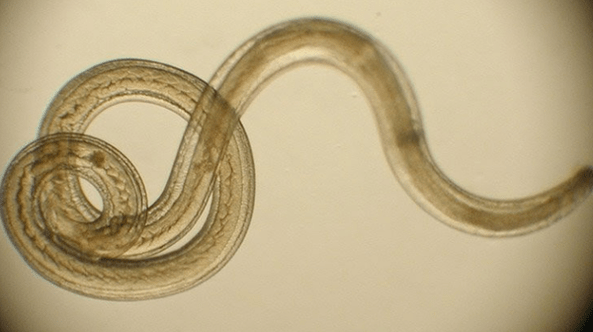
Rashes, severe itching and bronchodilator spasms are considered the most common signs of parasite allergy.
Some factors that contribute to the development of allergies:
- Pathology of pregnancy in the mother.
- Smoking and other bad habits.
- Poor nutrition.
- Frequent respiratory diseases.
- The presence of a focus of chronic infection in the body.
- From the digestive system: biliary dyskinesia, reflux, and also helminthiasis.
So to the question: "Can worms provoke and cause allergies?"The answer is definitely yes.
What parasites cause allergic reactions?It has been proven that many helminths manifest themselves in this, including roundworms, pinworms, and echinococci.
What happened?
The negative effects of parasites are due to both direct effects on the intestinal mucosa and their effects on the immune system.In the acute phase of the parasite attack ─ the first few weeks ─ the body reacts to the parasite non-specifically;in the future, the body's response can vary depending on the type of helminth, its location, and the intensity of the invasion.
Worm wastes and toxins cause activation of immunocompetent cells, excessive production of immunoglobulins, especially IgE, and formation of immune complexes.
Directly at the location of the worms, they cause mechanical damage and cause a local inflammatory reaction through attachment organs: hooks, suction cups.Parasitic cysts, cysticerci ─ helminth larvae, located in internal organs, can mechanically compress the latter.Metabolic processes in the body are disrupted due to the fact that helminths consume the host's nutrients.Worms can neutralize digestive enzymes and interfere with absorption.
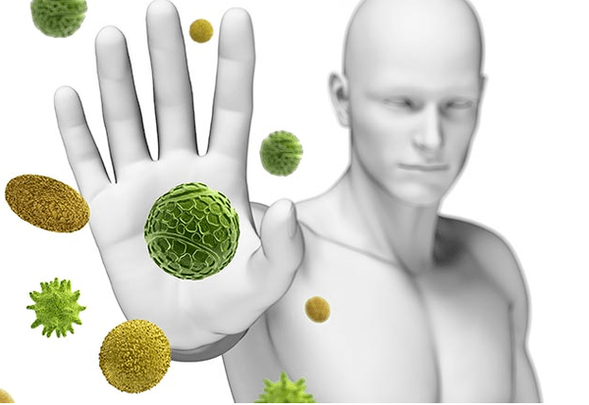
Allergies are caused by toxic waste products of parasites, which have a depressing effect on the human immune system.
Parasites have a suppressive effect on the immune system, releasing enzymes that break down antibodies or disrupt the interaction of immunocompetent cells.Immunosuppression, in turn, leads to chronicity of the process and more significant weakness of the body.
In this case, the parasite avoids the host's immune response in every possible way.For example, some worms use the phenomenon of antigen mimicry, when they have antigens on their surface that are similar to the antigens of the affected organism.The immune system then stops detecting the presence of foreign genetic material.It can also cause the immune system to attack its own body, causing the person to develop an autoimmune disease.
Immunological details
In the acute phase, the immune system reaction predominates in the form of immediate hypersensitivity (atopic reaction).Develops immediately after contact with antigen.
The first contact with worms leads to the production of IgE by B lymphocytes. These immunoglobulins have a high affinity for receptors located on the surface of mast cells and basophils.The latter contains a large number of granules with histamine - one of the main mediators of allergic reactions ─ and other biologically active substances: tryptase, chymase, heparin.Immunoglobulin E attaches to the surface of mast cells and basophils, thereby sensitizing them.This happens not only at the site of invasion (in the case of helminths, in the intestine), but, thanks to the entry of antibodies into the general bloodstream, throughout the body.
Upon subsequent contact with the allergen, degranulation of mast and basophilic cells occurs - the release of their granular contents.
Among the main biological effects that arise are as follows:
- Smooth muscle contraction.
- Dilation of blood vessels, increasing their permeability.
- Cell damage.
With the rapid entry of a large amount of these mediators into the blood, the following is possible:
- Itchy skin.
- Edema.
- Diarrhea.
- Bronchospasm.
- Drop in blood pressure.

The effect of this mediator leads to the appearance of symptoms of various allergic diseases.When helminthiasis progresses to a chronic stage, the worm changes its antigenic structure.Not only IgE is produced, but also large amounts of other classes of immunoglobulins, which mediate other types of body reactions, including immune complex reactions - where damage to body cells is caused by immune complexes circulating in the blood.The same mechanism may underlie the development of autoimmune processes.
Manifestation
Signs of allergies, in addition to the characteristic symptoms of parasite infestation:
- Increased body temperature.
- Skin rash.
- Edema.
- Lymphadenopathy.
- Pain in joints and muscles.
- Blood tests show leukocytosis, eosinophilia, basophilia.
- Immunological studies: increased IgE and other immunoglobulins.
- Pulmonary system: cough, pneumonia, pleurisy, bronchospasm.
- Digestive organs: abdominal pain, dyspepsia.
- The spleen and liver are enlarged
Diagnostics
If you have allergies or autoimmune diseases, you must remember that this may be caused by helminthic attacks.For a correct diagnosis, a well-collected allergy history is important, as well as the following:
- Coproocystoscopy.
- Bacteriological examination of stool.
- Serological study by looking for antiparasitic antibodies.
- Intradermal diagnostic tests with parasite allergens (for example, the Kasoni intradermal test to diagnose echinococcosis).
Treatment and prevention
Eliminating parasitosis can completely eliminate allergic disease or reduce its course.
So, if the cause of the allergy is helminths, antiparasitic treatment is very important.It is part of elimination therapy - eliminating allergens from the body.The severity of the disease is stopped, transferred into remission and maintained with the use of the following groups of drugs:
- Glucocorticosteroids.
- Antihistamines.
- Beta agonists.
- Membrane stabilizing agent.
Exactly what product is needed and in what dosage depends on the type of allergy and its severity.

At the same time, it is important to correct the accompanying changes in the body that accompany parasitosis: hypo- and avitaminosis, anemia and others, as well as follow a hypoallergenic diet.The latter consists of excluding highly allergenic foods: milk, eggs, smoked meat, citrus fruits, coffee, alcohol, sweets, etc... The characteristics of the diet are determined by the clinical picture of the allergy.
The prevention of allergies caused by parasitic infestation is, first of all, the prevention of infection with helminthiasis, its identification and treatment.